Very special & cuisine wine, consistently
What is Icewine?
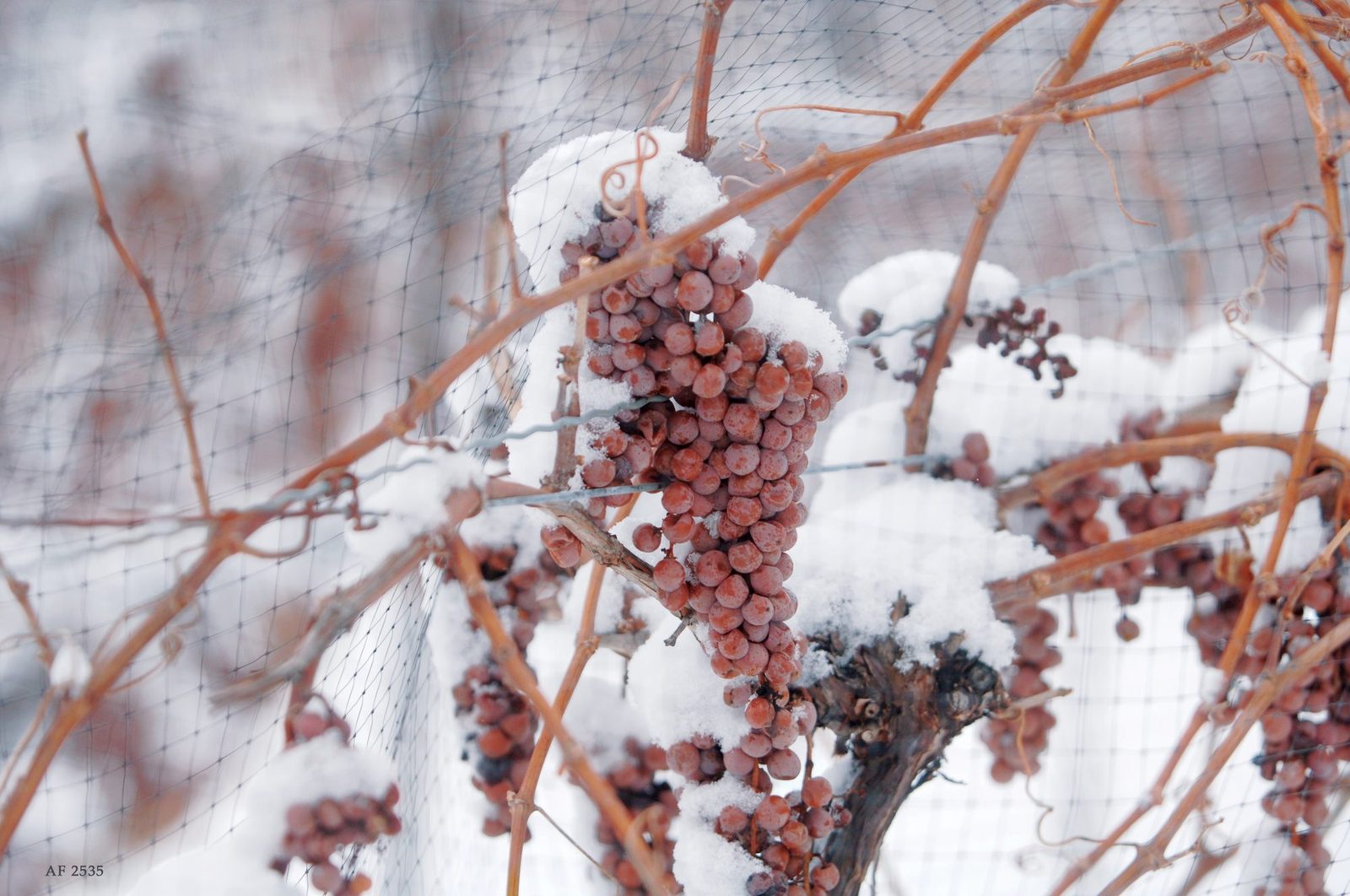
Icewine is made from grapes left to freeze naturally on the vine in the Canadian Niagara Peninsula. The water freezes but the sugars do not — so when the frozen grapes are pressed, only a few precious drops of intensely concentrated, luscious juice are released. Only healthy grapes keep in good shape until the opportunity arises for an ice wine harvest.
Its making is rigorously governed by Canada's VQA — the Vintners Quality Alliance. Artificial freezing of the grapes is strictly prohibited, and production is limited to the world's few wine regions cold enough to reach the necessary sub-zero temperatures with some regularity. Canada and Germany are the world's largest producers of ice wine.
About 75 percent of the ice wine produced in Canada comes from Ontario. The pioneering Inniskillin winery in Niagara-on-the-Lake, Ontario, made its first icewine in 1984 — Canada's first. Inniskillin icewine is well renowned as the world leader in icewine production and supply, sold in over 74 countries and the #1 distributed wine in Global Travel Retail.
Icewine was first made by the Germans, where it is called Eiswein. The original concept was the result of an unexpected frost during the winter of 1794. More than 200 years later, icewine is celebrated as a specialty wine offering a tantalizing and complex sensory experience — produced from French hybrids such as Vidal (the 1989 Inniskillin award winner) as well as Vitis vinifera grapes including Riesling and Cabernet Franc.